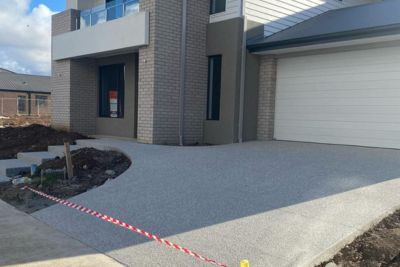
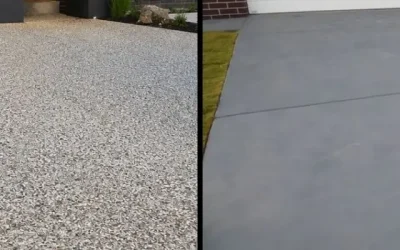
If you’ve ever walked through Bunnings or Mitre 10 in Geelong, you’ve probably noticed shelves stacked with bagged concrete mixes labelled Post Hole, Rapid Strength, General Purpose, or High Strength. For many homeowners tackling DIY projects, the variety can be confusing. Should you grab the cheaper bag, the one that promises speed, or the one that sounds the strongest?
This guide breaks down the four main types of bagged concrete you’ll see in local hardware stores, explains where each works best, and helps you feel confident when choosing the right one for your next project.
What is Bagged Concrete?
Bagged concrete is a pre-mixed blend of cement, sand, and aggregate that only needs water to be ready for use. It’s a practical option for smaller DIY jobs around the house, whether you’re patching a path, setting a letterbox, or putting in garden edging. Because you can buy it in manageable 20kg or 25kg bags at hardware stores, it saves the hassle of arranging bulk deliveries or hiring a concrete truck.
However, for big projects, bagged concrete mixes quickly reach their limit. Large slabs, patios, and driveways need proper reinforcement, thicker pours, and consistent mixing to achieve a strong and high-quality finish that can cope with heavy clay soils common in the Geelong region. That’s where bulk concrete and professional concreting come in.
Types of Bagged Concrete
Bagged concrete is great for smaller DIY projects, but the mixes aren’t interchangeable. Here’s a breakdown of the main types so you know which one suits your project:
Post Hole Concrete
Post Hole concrete is a coarse blend made to lock vertical posts firmly in the ground. It usually contains larger pieces of aggregate, which give it the bulk and stability needed for jobs like fencing, letterboxes, and clotheslines. The mix is simple to use: you just pour it into the hole, add water, mix it and let it set around the post, no fancy tools required. An example of this type is Boral’s Post Hole Concrete Mix.
Its strength is in holding posts steady, even in clay soils that expand and contract through wet winters and dry summers. But it’s not designed for flatwork like slabs, footpaths, or anything that needs a smooth, load-bearing finish. Post Hole mix is a specialist product, which is perfect for posts, but not a replacement for other concrete.
Rapid Set Concrete
Rapid Set concrete does exactly what its name suggests. It hardens fast, often within 15 to 20 minutes. This makes it handy for smaller jobs where you don’t want to wait around all day, like fixing a wobbly post, filling a hole, or carrying out quick repairs around the garden. Products such as Cement Australia’s ProStrength Rapid Set are designed for these quick fixes and are especially useful when the weather looks unpredictable, since you can finish the job before rain has a chance to cause problems.
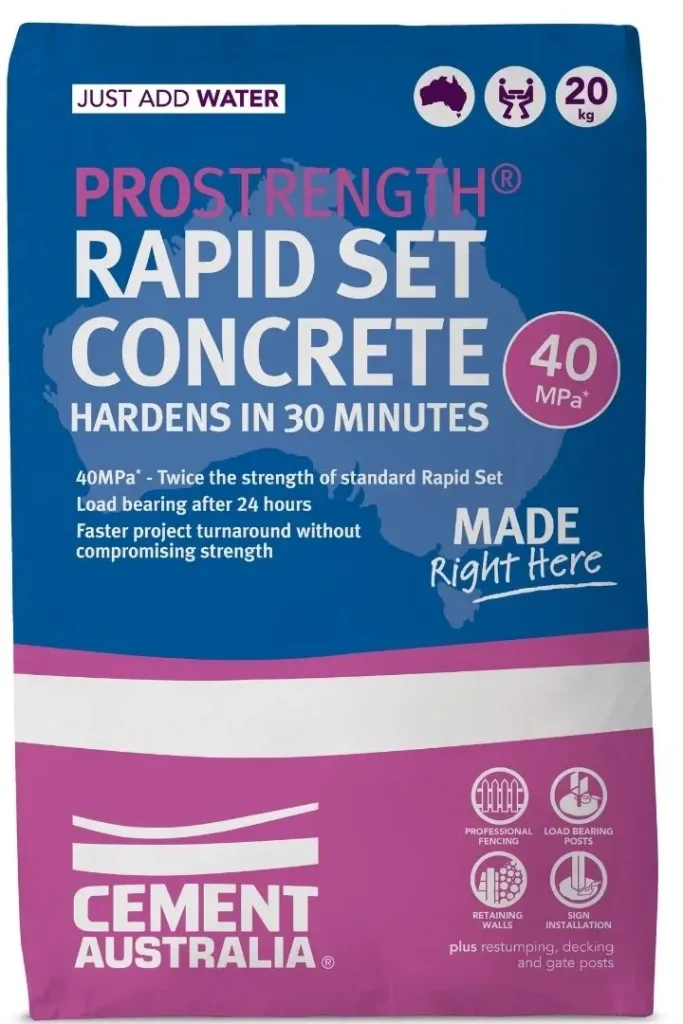
Image courtesy: https://www.cementaustralia.com.au/products/prostrength-rapid-set
The trade-off is that you don’t get much working time, so once it’s mixed, you need to move quickly. This makes it less suitable for larger pours, where you might need extra time to shape and level the concrete properly. In cooler months, Rapid Set can be a lifesaver for quick fixes, but for bigger projects, it’s best to choose a slower-setting mix.
General Purpose Concrete
General Purpose concrete is the all-rounder of bagged mixes. With a balanced blend of cement, sand, and aggregate, it’s versatile enough for small slabs, garden edging, paving repairs, and paths. A popular option is Cement Australia’s General Purpose Cement, which is easy to find in local hardware stores and trusted for everyday DIY jobs around the home.
Its strengths are affordability and accessibility. You’ll find it in any hardware store and it’s simple to work with. But while it’s tough enough for light projects, it isn’t made for heavy structural loads. For example, it might hold up fine under a small garden shed, but it won’t last long under a double-car driveway.
High Strength Concrete
High Strength concrete is formulated with a higher MPa rating, which means it can handle heavier loads and harsher conditions than standard mixes. It’s often chosen for footings, structural supports, retaining walls, or any project where extra strength is critical. For homeowners, it’s a smart option when you want extra reliability in areas that will take more weight or traffic. A well-known option is Dingo’s Hi-Strength Concrete, which is designed for jobs that need extra reliability in areas exposed to heavy use or weight.
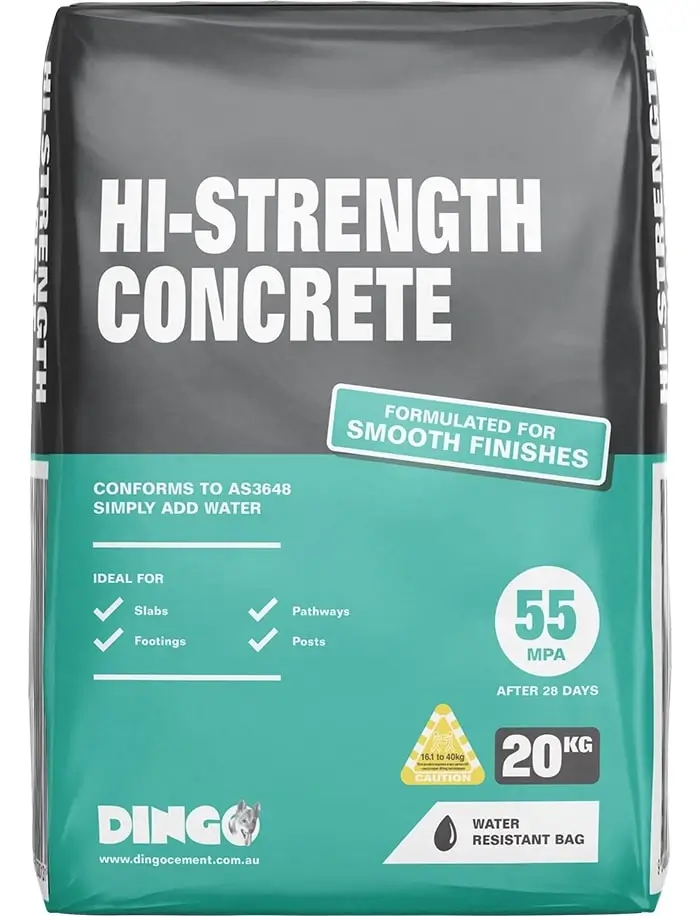
Image courtesy: https://dingocement.com.au/product/hi-strength-concrete/
The downside is that it’s more expensive and can be a bit harder to work with compared to General Purpose mixes. But in suburbs like Lara and Highton where reactive clay soils and shifting ground are common, investing in a stronger mix can prevent long-term issues. It’s best reserved for projects where strength truly matters, rather than everyday DIY jobs.
Choosing the Right Bagged Concrete for Your Project
Picking the right bagged concrete comes down to more than just the price. Here are the key factors to consider before you start mixing:
Project Size
For smaller jobs like a fence post or garden edging, Post Hole or General Purpose mixes are usually enough. If you’re working on something larger like a shed slab, you’ll quickly find bagged mixes less practical. That’s where a bulk pour or professional help becomes more efficient.
Strength Requirements
If your project only needs light to medium strength, General Purpose is the most versatile option. But if you’re working on footings, retaining walls, or areas with heavy loads, choose High Strength for added durability. Post Hole mix is strong in a very specific way, but only for anchoring vertical posts.
Setting Time
When you’re pressed for time, Rapid Set is the clear winner. It’s ideal for quick fixes like securing a wobbly letterbox or repairing a post. But if you need longer to shape, level, or finish the concrete, stick with General Purpose or High Strength, which allow more working time before curing. If you’d like to understand more about curing times, check out our guide on how long concrete takes to cure.

Soil and Weather Conditions
In areas with reactive clays, High Strength mixes cope best with ground movement and moisture changes. For more stable sites or lighter projects, General Purpose is usually sufficient. If you’re setting posts in these soils, Post Hole still works, but make sure to go deep enough for stability.
Safety and Instructions
All mixes, whether Post Hole, Rapid Set, General Purpose, or High Strength, rely on correct mixing to perform as intended. Follow the water ratios on the bag, mix thoroughly, and wear gloves and a mask to avoid cement dust. Cutting corners here can weaken even the strongest concrete.
When to Call a Professional Concreter
Bagged mixes are perfect for smaller jobs, but they’re not always practical when the project gets bigger. Driveways, patios, and shed slabs in particular need consistent batching, reinforcement, and a proper finish to hold up against Geelong’s reactive soils and wet winters.
If you’re tackling something on that scale, it’s worth bringing in an experienced concreter Geelong homeowners trust. A local concreter knows how to pour at the right depth, set up reinforcement, and account for site conditions so the slab lasts. They’ll also handle council requirements that come with projects like crossovers and footpaths.
DIY is fine for quick fixes like fence posts or a garden path, but for larger work, a concreter can save you the stress and ensure the job stands the test of time. If you’re ready to bring in a professional, here’s what to look for in choosing a good concreter in Geelong.

Bagged Concrete: The Simple Rule of Thumb
Here’s the easy way to remember it: Post Hole for securing posts, Rapid Set when you need quick results, General Purpose for most small DIY jobs, and High Strength for projects that demand extra strength. Each mix is designed with a specific purpose in mind, so choosing the right one helps your project last longer and perform as it should.
Bagged concrete is perfect for those smaller jobs you can knock over on the weekend, but bigger projects are a different story. A new driveway, patio, or shed slab needs more than a few bags and a wheelbarrow. That’s where we can help. As local concrete contractors in Geelong, we take care of the preparation, reinforcement, and finishing so your concrete looks great and stands strong against local soils and weather.
If you’re planning something bigger, get in touch with our team for a free onsite quote. Call us on (03) 5292 1455 to book in your free quote.