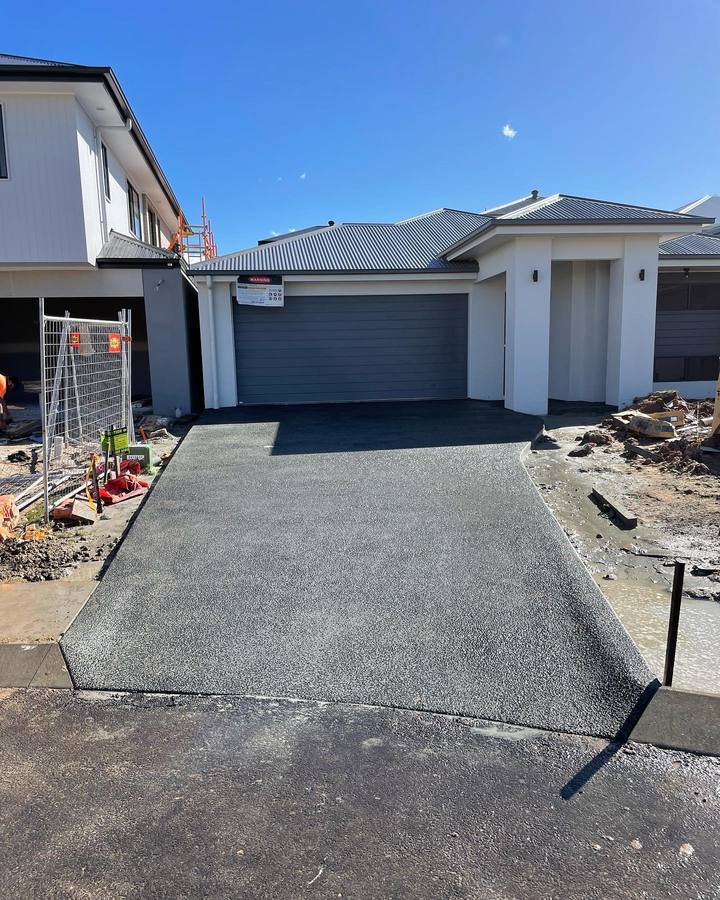
Geelong’s weather can be unpredictable, and concrete is more sensitive to temperature than most homeowners realise. Pour on the wrong day and you risk cracking, surface defects, or a slab that never reaches its full strength. Getting the timing right is one of the simplest ways to protect your investment.
Why Temperature Matters More Than the Calendar
Concrete doesn’t just dry. It cures through a chemical reaction called hydration, and that reaction is directly affected by heat and cold. Too hot and the water evaporates before the concrete has time to gain strength. Too cold and the reaction slows down or stalls entirely.
The ideal curing temperature sits between 10°C and 32°C. Geelong’s climate means that range is achievable for much of the year, but summer and winter both bring conditions that require extra care.
Summer Pours: The Risks of Concreting in Hot Weather
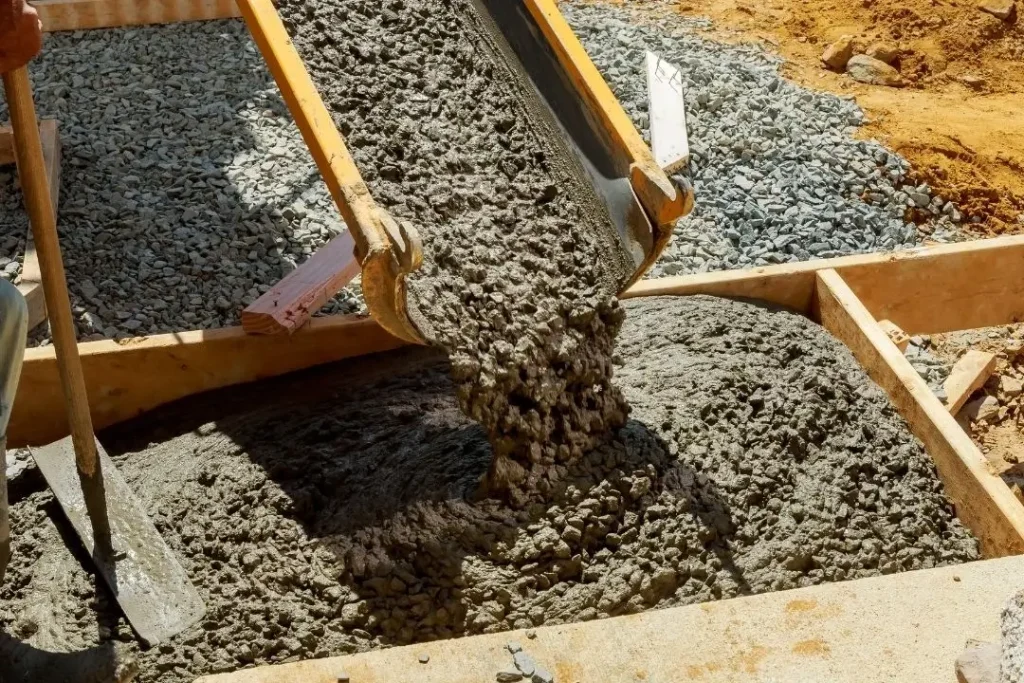
Geelong summers regularly push past 30°C, and on hot, windy days the surface of freshly poured concrete can dry out faster than the mix can properly set. This leads to plastic shrinkage cracking, a problem that appears within hours and is difficult to fix after the fact.
Direct sun, low humidity, and warm winds all accelerate moisture loss. Concreting in hot weather requires specific precautions: scheduling pours early in the morning, using shade cloth, misting the subbase before placement, and starting curing procedures immediately after finishing.
It’s not that summer pours can’t work. They just demand more preparation and faster action once the concrete is down. An experienced concreter will adjust the mix and the process to suit the conditions.
Winter Pours: What Cold Weather Does to Concrete
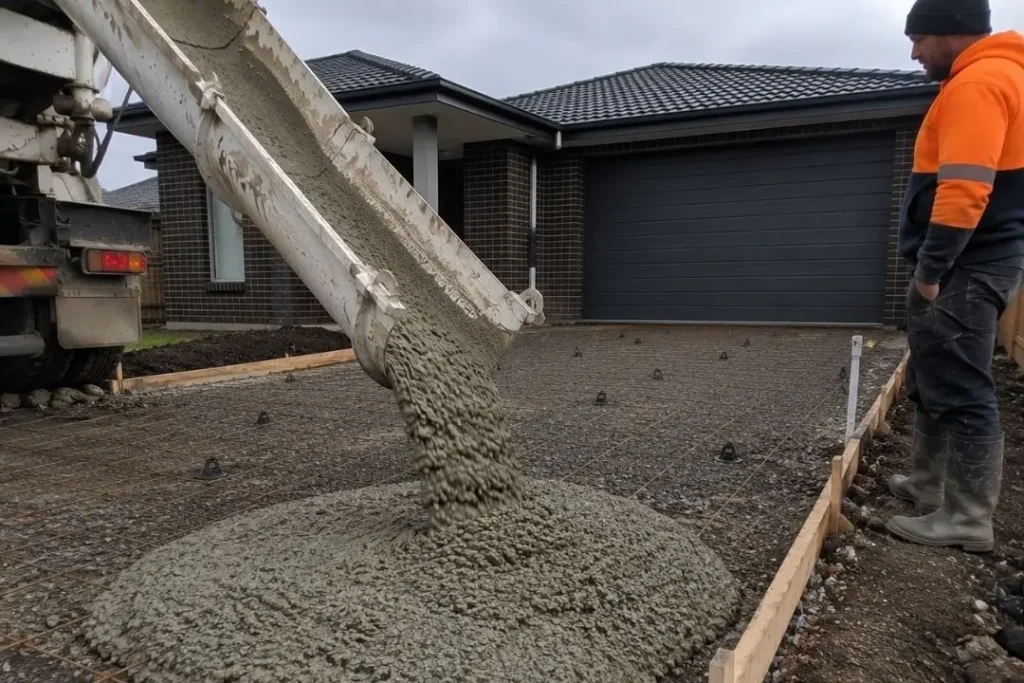
Geelong winters are mild compared to much of Victoria, but overnight temperatures can still drop close to freezing between June and August. If concrete freezes before it has cured, the expanding ice crystals disrupt the internal structure and permanently weaken the slab.
Cold weather also slows the curing process significantly. A slab that would reach workable strength in three days during autumn might take a week or more in winter. That affects your project timeline and how soon the area can be used.
The impact of temperature on concrete performance is well documented, and in practice it means winter pours need insulating blankets, careful timing, and close attention to overnight forecasts. They’re manageable, but they’re not the easiest conditions to work in.
The Seasons That Work Best in Geelong
Autumn and spring are the most reliable seasons for concrete work in Geelong. Temperatures are moderate, humidity is reasonable, and the risk of extreme heat or frost is low. These conditions give the concrete the best chance to cure evenly and reach full strength without intervention.
March through May and September through November tend to offer the most consistent working days. That said, a single week of good weather in July can be better than a heatwave in February. Season is a guide, not a rule.
What to Watch for Beyond Just Temperature
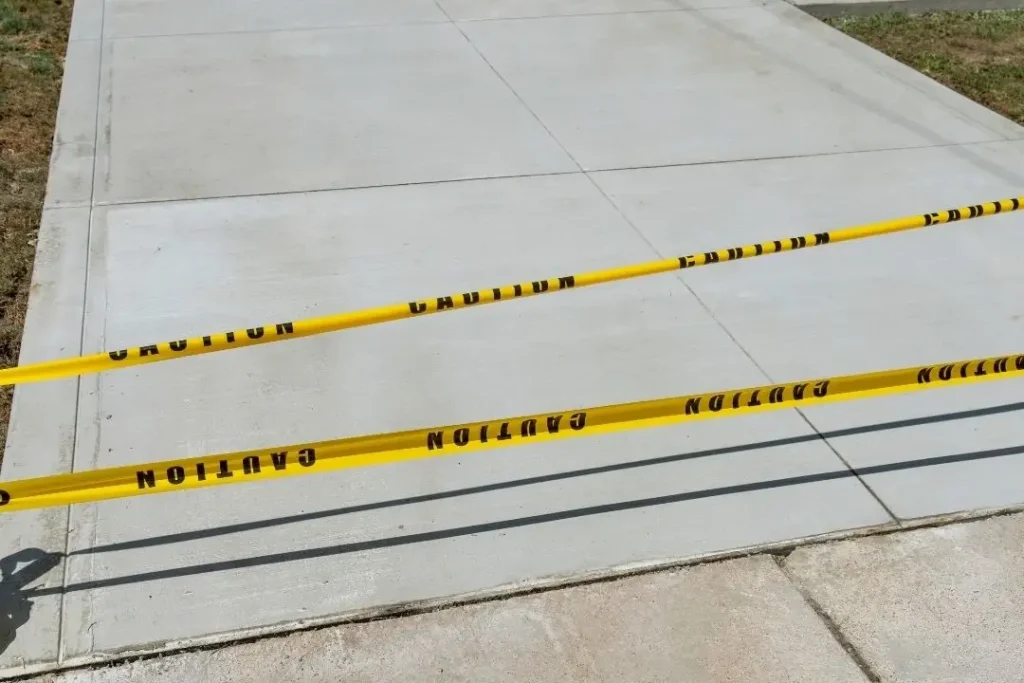
Rain is the other variable worth planning around. Fresh concrete needs to be protected from heavy rain for at least the first few hours after placement. Rain falling on a surface that hasn’t set can wash out the cement paste and leave a weakened, pitted finish.
Wind is often underestimated. Even on a mild day, strong winds pull moisture from the surface quickly and can cause the same problems as direct heat. A site that’s exposed to the bay or open paddocks needs more attention than a sheltered courtyard.
Good site preparation also plays into how well a pour goes regardless of season. A well-prepared base drains correctly, holds its shape, and gives the concrete a stable platform to cure on.
Does the Project Type Change the Timing?
Larger pours are more sensitive to weather than small ones. A concrete driveway involves a bigger surface area exposed to the elements, which means temperature and wind have more opportunity to cause problems. Smaller jobs like a concrete garden path or step repair are easier to manage in marginal conditions.
Coloured or exposed aggregate concrete is also more sensitive to surface drying during the finishing stage. If you’re after a decorative finish, scheduling during mild weather gives the finisher more time to work the surface correctly.
Planning Your Project Around the Weather
The practical approach is to book your job during autumn or spring, keep an eye on the five-day forecast as the date approaches, and be prepared to shift by a day or two if conditions look unfavourable. Most experienced concreters will flag a problem forecast before you even need to ask.
If your project needs to happen in summer or winter, that’s fine. The work can still be done well. It just requires the right preparation, the right mix design, and a concreter who knows how to adjust for the conditions rather than ignore them.
Ready to Plan Your Concrete Project?
If you’re thinking about a new slab, driveway, or path and want to time it right, our team is happy to talk through your options. We work across Geelong and surrounding areas, including as concreters servicing Ocean Grove.
Call us on (03) 5292 1455 or send us a message through our project enquiry form and we’ll advise on the best timing for your project.