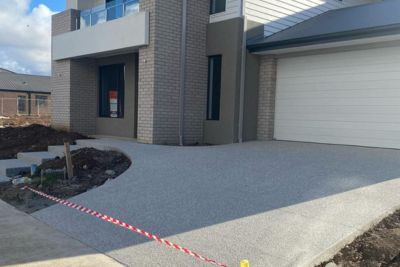
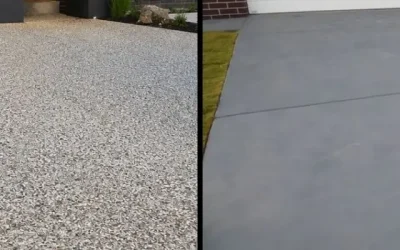
The Question Most Homeowners Ask Too Late
Driveway thickness is one of those decisions that gets made early in a project and lives with you for decades. Get it right and you have a surface that handles daily use without cracking. Get it wrong and you are looking at repairs within a few years.
Most homeowners focus on colour, finish, or cost per square metre. Thickness rarely comes up until something goes wrong. This guide explains what the standards require, what affects the right depth for your situation, and why cutting corners here is one of the more costly mistakes in residential concreting.
What the Australian Standard Actually Requires
AS 3727.1 is the Australian Standard that covers residential slabs and footings. For a standard residential driveway, it sets a minimum thickness of 100mm for light vehicle use. This applies to driveways used by passenger cars and light SUVs under normal conditions.
That 100mm figure is a minimum, not a recommendation. It assumes the subgrade beneath the slab is properly prepared, the concrete mix meets the required strength, and the site conditions are straightforward. If any of those factors change, the minimum changes with them.
When 100mm Is Not Enough
A standard family car weighs around 1,500kg. A large SUV or dual-cab ute can push past 2,500kg. A concrete slab that is adequate for one may not be adequate for the other, particularly if the vehicle parks in the same spot every day.
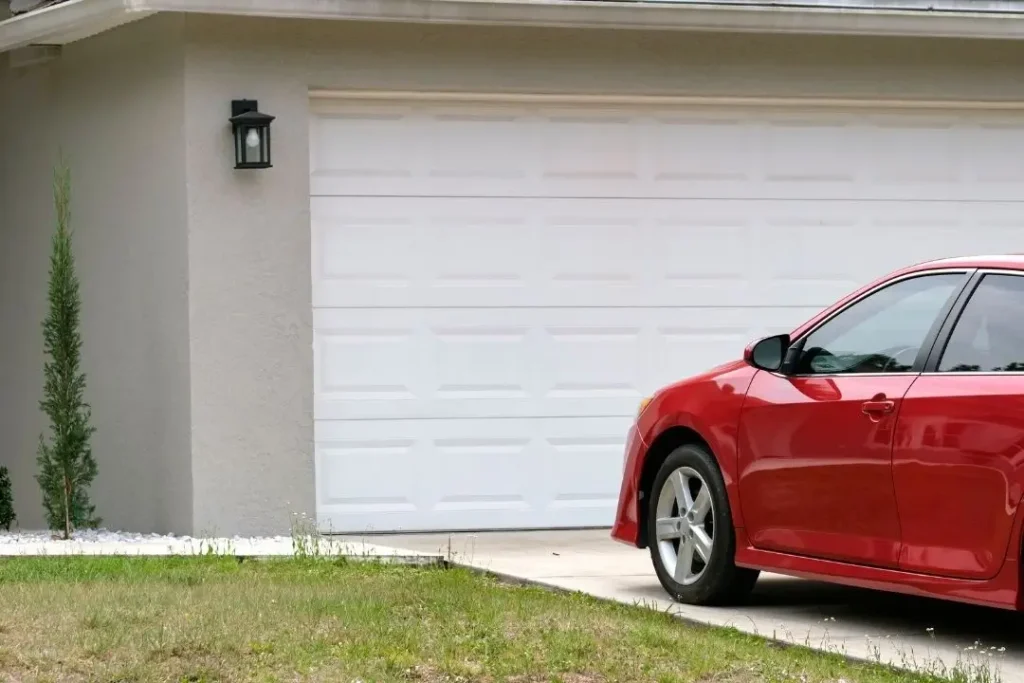
If you regularly park a heavy vehicle, a caravan, or a trailer on your driveway, 125mm to 150mm is a more appropriate target. The same applies if your driveway has a steep fall, a long run, or sits over fill material that has not fully settled. Thicker slabs distribute load more evenly and are far less likely to crack under repeated stress.
Concrete strength matters here too. A thicker slab poured with an inadequate mix will still underperform. Understanding what MPa means for your driveway helps you make sense of the full picture, not just the depth.
How Subgrade Preparation Affects the Right Thickness
The ground beneath your slab does as much work as the concrete itself. A well-compacted, stable subgrade supports the slab evenly and reduces the risk of movement. A poorly prepared base creates voids, uneven support, and pressure points that cause cracking over time.
In Geelong, soil conditions vary considerably across suburbs. Clay-heavy soils expand and contract with moisture changes, which puts ongoing stress on slabs. If your site has reactive soil, your concreters may recommend a thicker slab, additional reinforcement, or both.
Slabs that crack early are often the result of inadequate base preparation rather than the concrete mix itself. Early cracking in concrete slabs is closely linked to poor subgrade conditions and insufficient thickness working together.
Reinforcement and How It Works With Thickness
Steel reinforcement, whether mesh or rebar, adds tensile strength to a slab. Concrete handles compression well but is brittle under tension. Reinforcement bridges that gap and holds the slab together if the ground beneath shifts.
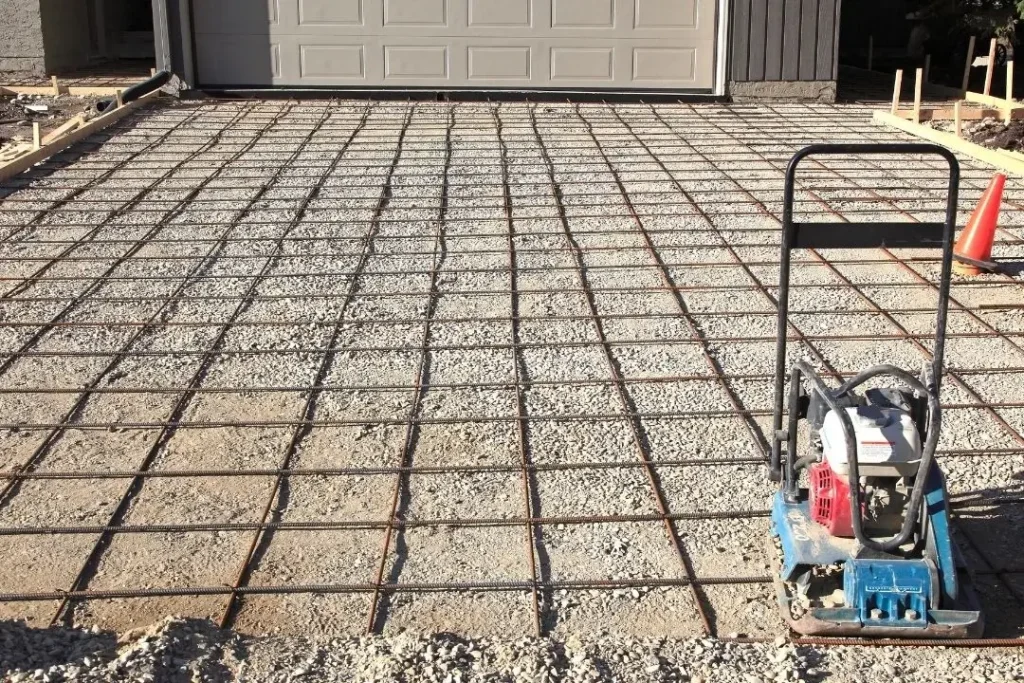
For residential driveways, SL72 or SL82 mesh is commonly used. The mesh needs to sit in the correct position within the slab, typically in the lower third, to do its job properly. A slab that is too thin cannot accommodate the mesh at the right depth, which defeats the purpose of including it.
This is why slab thickness and reinforcement should be planned together. The slab needs enough depth for the mesh to sit in the right position, so it can help control cracking and support the concrete under load.
Concrete Strength and Thickness Are Not Interchangeable
Some homeowners assume that using a stronger concrete mix means they can reduce the slab thickness. That is not how it works. Thickness and strength address different structural requirements. Strength affects how the concrete handles compression and surface wear. Thickness affects how the slab distributes load across the subgrade.
For residential driveways, a 25 MPa mix is a common starting point, with 32 MPa used where heavier loads or more demanding conditions apply. The classification of concrete strength grades explains how these ratings relate to load-bearing capacity and durability, which is useful context when discussing options with your concreters.
Choosing the right strength and the right thickness are separate decisions that both need to be made correctly.
What a Typical Residential Driveway Looks Like in Practice
For most Geelong homes with standard passenger vehicles, a 100mm slab with SL72 mesh and a 25 MPa mix is a reasonable baseline. That assumes a properly compacted subgrade, a relatively flat site, and no heavy vehicles.
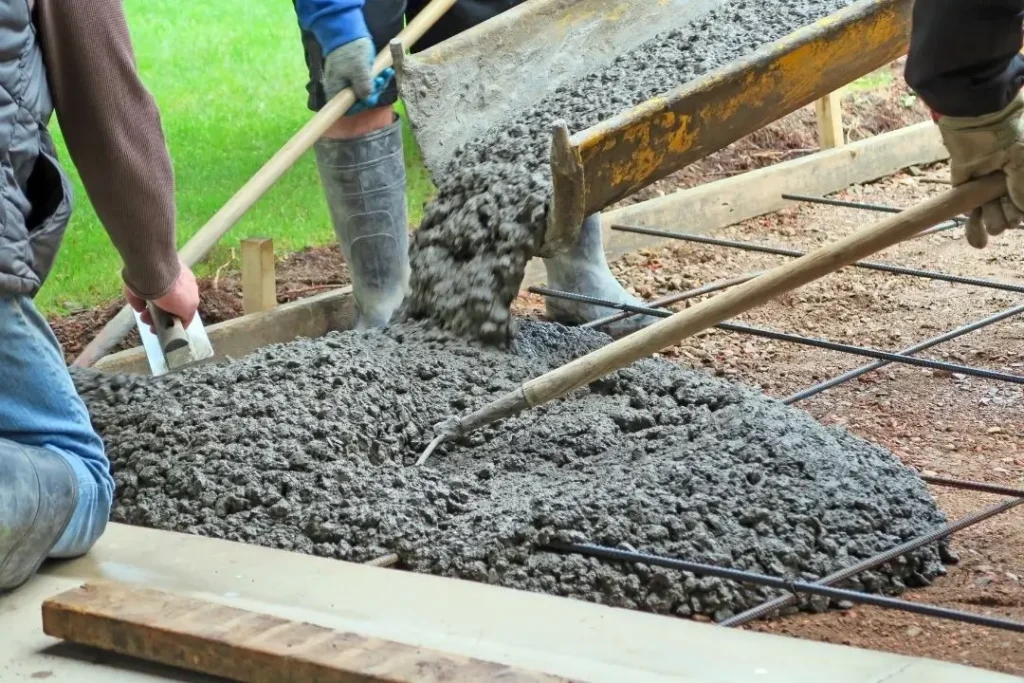
If the site has any complicating factors, such as reactive soil, a steep gradient, heavy vehicles, or fill material, 125mm with a stronger mix is a more sensible approach. The additional cost of the extra concrete is modest compared to the cost of repairing or replacing a slab that fails prematurely.
For concrete driveways in Geelong, local conditions and soil types are worth factoring in from the start rather than discovering them mid-project.
The Cost of Getting It Wrong
A driveway slab that is too thin will not necessarily fail immediately. It may look fine for a year or two before hairline cracks appear, particularly near the edges or where vehicles turn. Those cracks widen over time, water gets in, and the subgrade beneath begins to erode.
By the time the damage is visible, the repair options are limited. Patching rarely holds long-term on a structurally compromised slab. Full replacement is often the only lasting fix, and that costs significantly more than doing it right the first time.
Thickness is not a place to save money on a driveway. The concrete itself is a relatively small part of the total project cost. The labour, preparation, and finishing are where most of the budget goes, so the marginal cost of an extra 25mm is small relative to the risk it removes.
What to Discuss With Your Concreters Before Work Starts
Before any concrete is poured, ask your concreters to confirm the recommended slab thickness for your specific site. A good concreter will assess the subgrade, ask about the vehicles you park, and factor in any site-specific conditions before quoting a thickness.
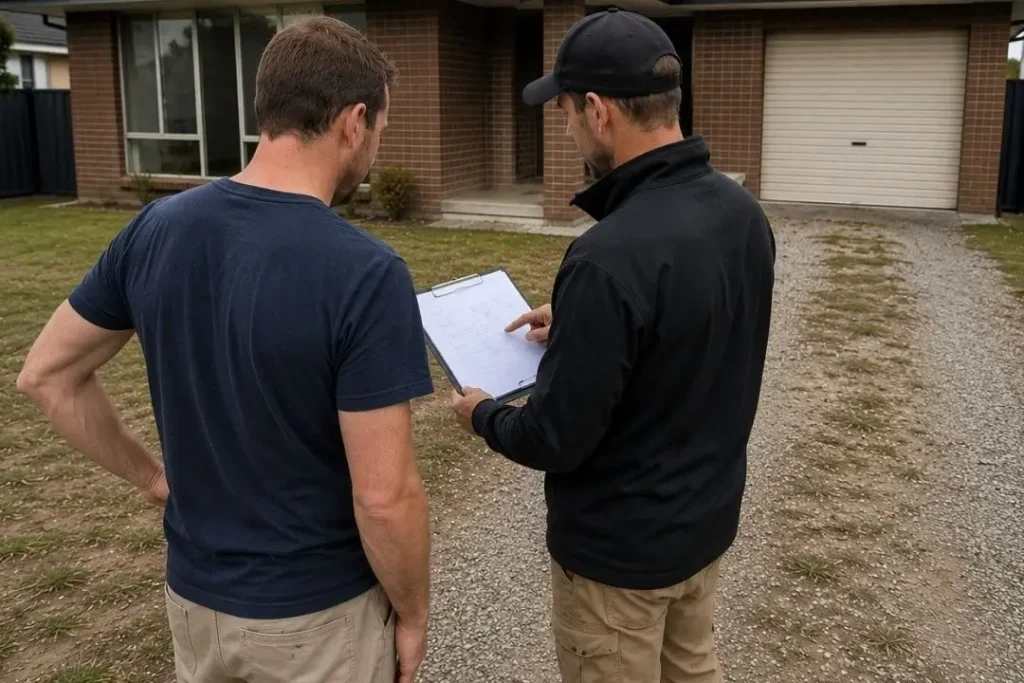
Ask what mix strength they are specifying and why. Ask how the reinforcement will be positioned. If the quote does not address these points, ask for them to be clarified in writing before you commit.
These are not unusual requests. Any experienced concreter should be able to answer them clearly and without hesitation.
Ready to Get Your Driveway Done Properly?
If you are planning a new driveway and want straightforward advice on thickness, mix, and preparation for your specific site, our team is happy to talk it through with you.
For concreters Corio and homeowners across the Geelong region trust, call us on (03) 5292 1455 or send us a message through our driveway enquiry form and we will get back to you promptly.